The upgraded Energy Savings Opportunity Scheme (ESOS) - a Native-Hue energy management briefing
ESOS NOW INCLUDES ACTION PLANS FOR ENERGY COST REDUCTION, AND PROGRESS REPORTING
The UK mandatory ESOS scheme was substantially upgraded to require an Action Plan then annual progress updates.
ESOS has to date required all large organisations and companies (there are around 8,000 of them) to
- set down their annual energy use and emissions
- carry out an audit of energy saving opportunities
- consider the findings at Board level.
The upgrades require reporting of
- the organisation’s plans for implementing the identified opportunities to save energy
- progress against Phase 3 action plan commitments is to be included in Phase 4 ESOS reports and where action plan commitments have not been met, participants are to provide an explanation
- there will be no requirement to provide Net Zero plans in Phase 4 – this expected inclusion was postponed by the government in February 2025.
The definition of “large” is similar to that in UK company law. Qualifying organisations are any UK large undertaking that either:
- employs 250 or more people, or
- has an annual turnover in excess of £44 million and an annual balance sheet total in excess of £38 million
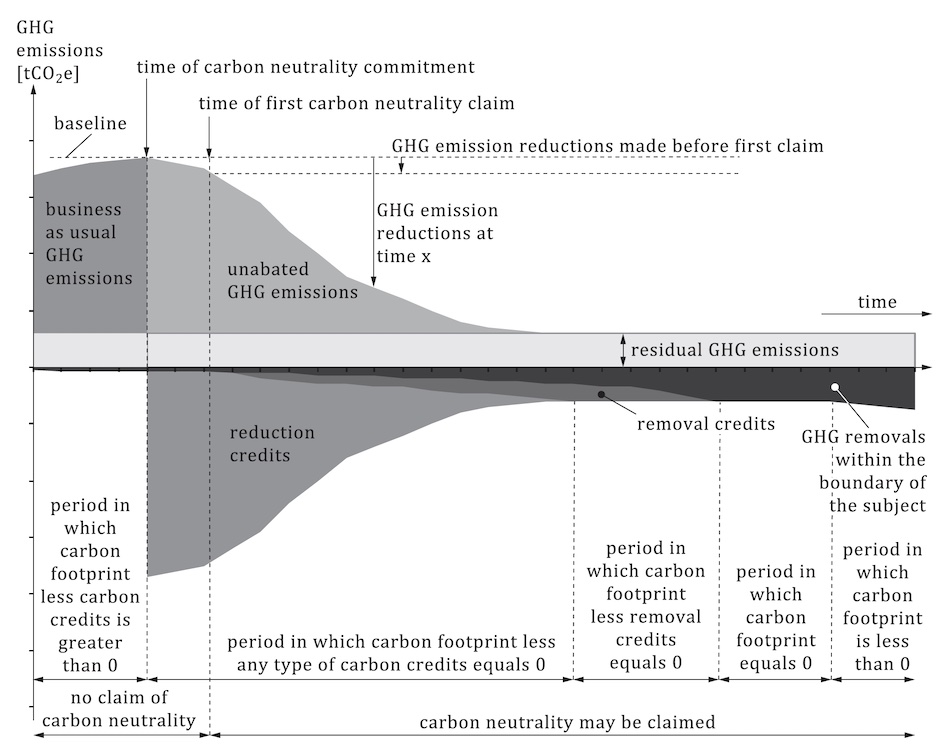
Net zero pathway stages (from ISO 14068-1)
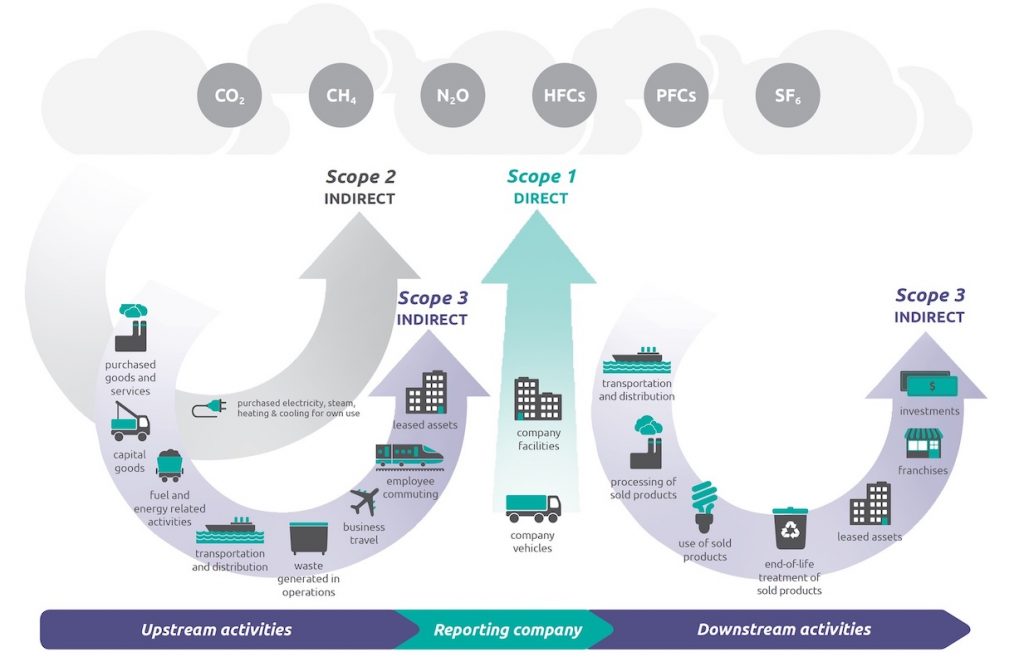
Greenhouse Gas Scopes 1, 2 and 3
NET ZERO REPORTING & AUDITING STANDARDS
ISO 14068 (2023) “Climate change management – Transition to net zero” Part 1 provides an international standard for organisations to report a Carbon Neutral status which can include offsetting in the short term. It requires reporting on
- the current measured carbon footprint
- plans for reduction of emissions with actions, target reductions and timescales
- any measures to offset emissions which must be justified, time-limited and restricted to approved schemes
- documentation of the plan and its verification
PAS 51215 – mandated for ESOS Phase 4 will provide an auditing standard for energy and emissions with regard to Net Zero pathways. It sets down requirements for conducting an energy and Net Zero audit and for reporting the findings, including requirements to
- compare current energy use and emissions with a Net Zero state in year 2050
- report on the planning of objectives to meet that state with science based targets
- have interim reporting for progress assessment
- have a 12 month base year to measure improvements against
- include all controlled emissions classified as Scope 1 (direct emissions like gas combustion), Scope 2 (indirect emissions like purchased electricity, heating or cooling) and some Scope 3 (supply chain emissions like employee mileage-charged travel)
The information in this Native-Hue energy management briefing should be verified before use for compliance purposes.
